🌵✨ Stapelia glanduliflora - Une merveille botanique à découvrir ! ✨🌵
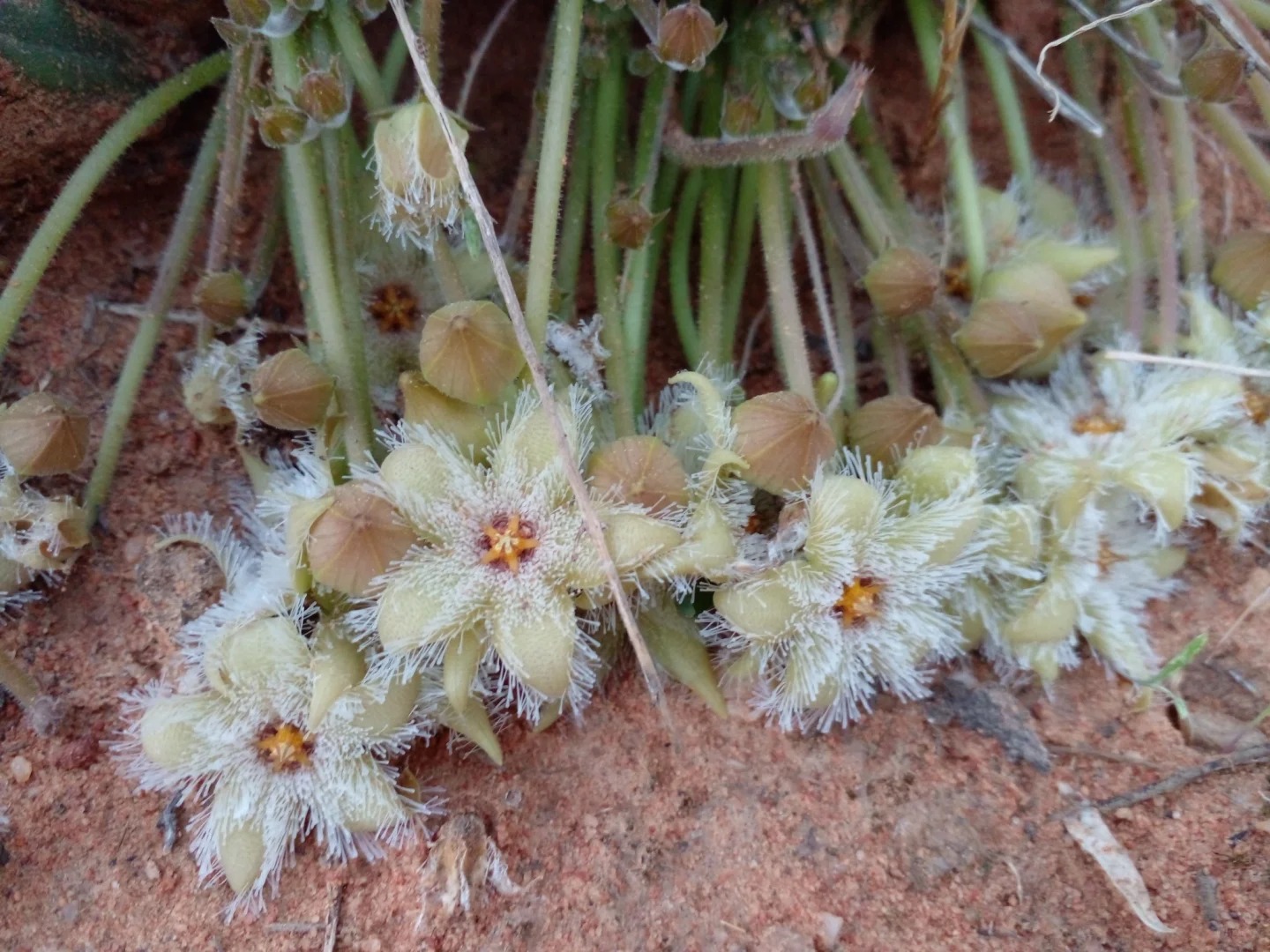
Stapelia glanduliflora is a small succulent that forms clumps of erect, grey-green to purplish, shortly hairy stems with low, conical tubercles joined into four obtuse angles along the stem. The stems are up to 6 inches (15 cm) long and 0.6 inches (1.5 cm) thick. Each tubercle is tipped with an erect or incurved rudimentary leaf.
🌟 Exotic origin:
Stapelia glanduliflora is native to South Africa. It grows on stony slopes among bushes, mainly along the valley of the Olifants River from near Klawer to about 20 km north of Citrusdal in the Western Cape province.
🌿 Unique Features: This plant forms clumps of erect, gray-green to purple stems with short hairs. The stems grow up to 15 cm long and 1.5 cm in diameter, with low, conical nodes.
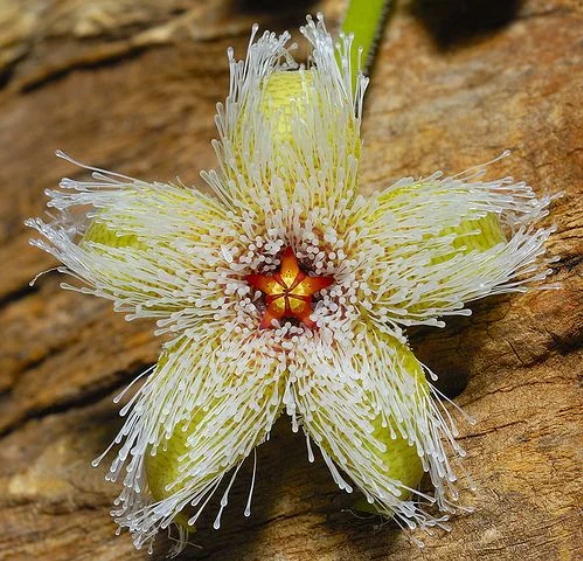
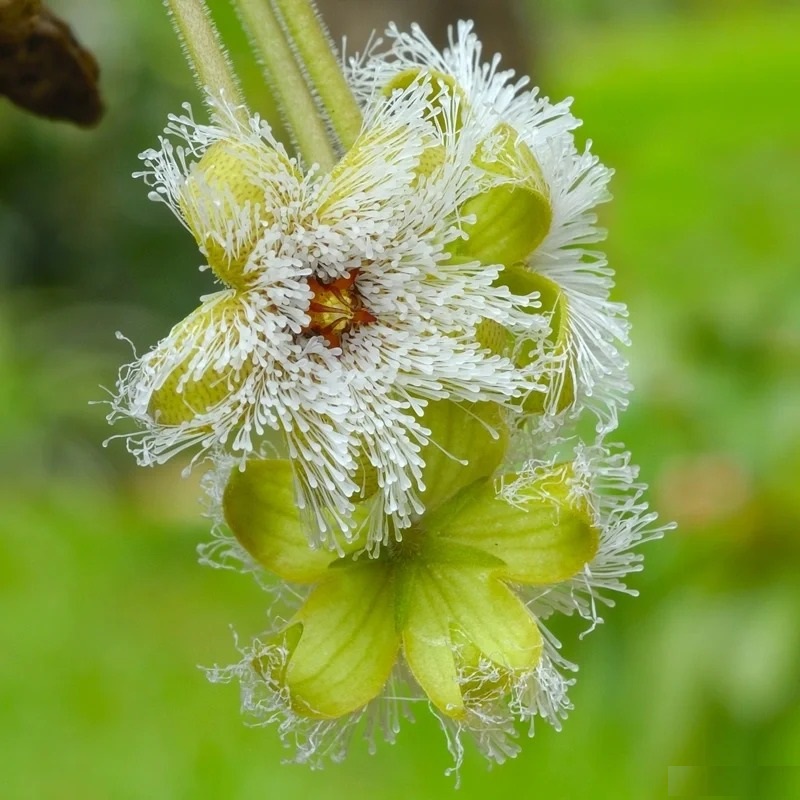
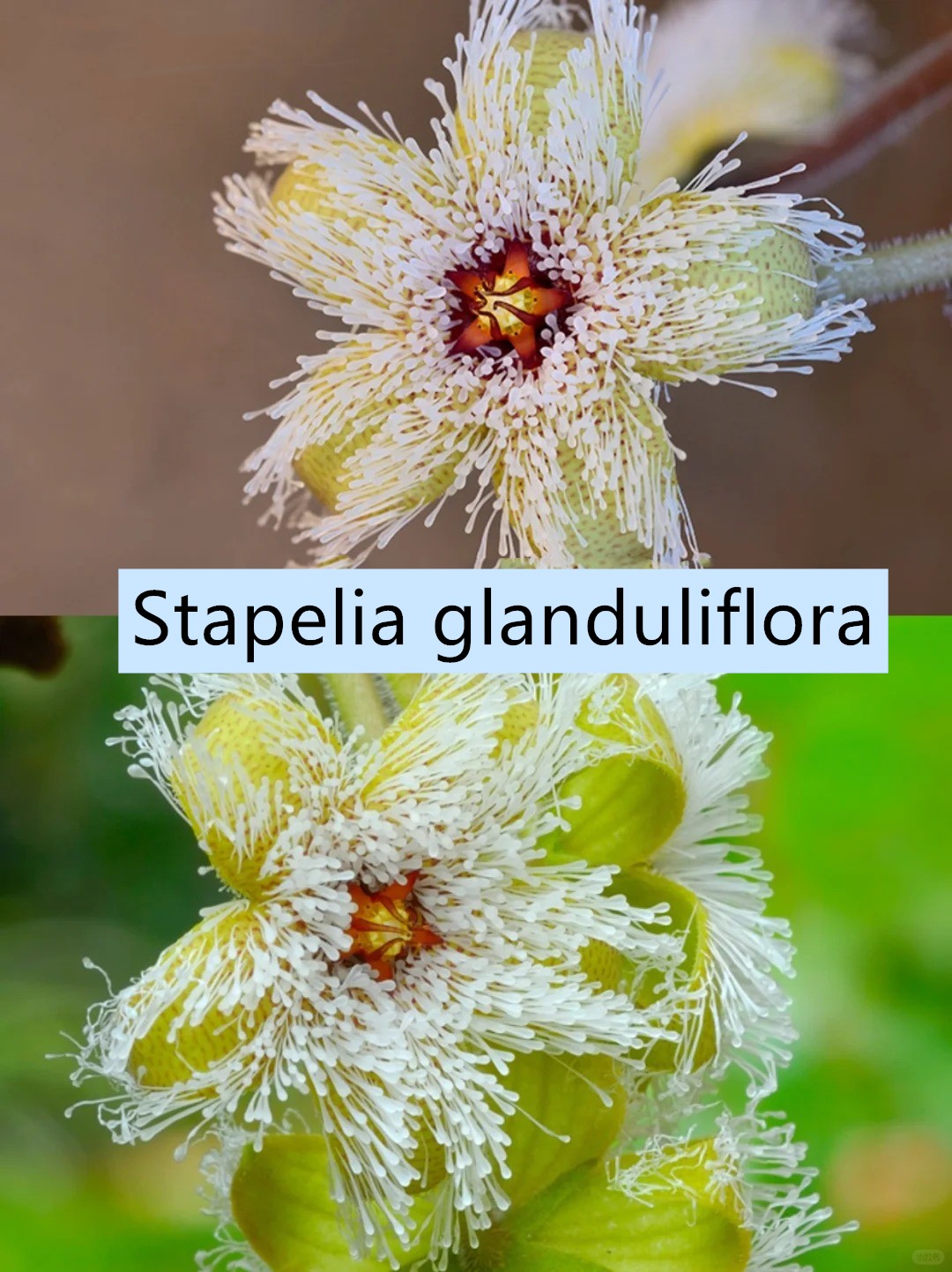
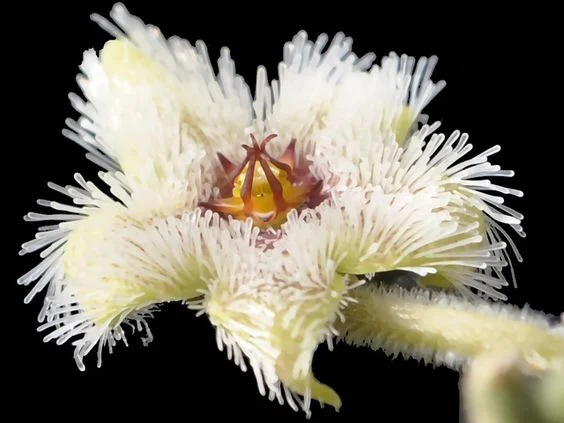
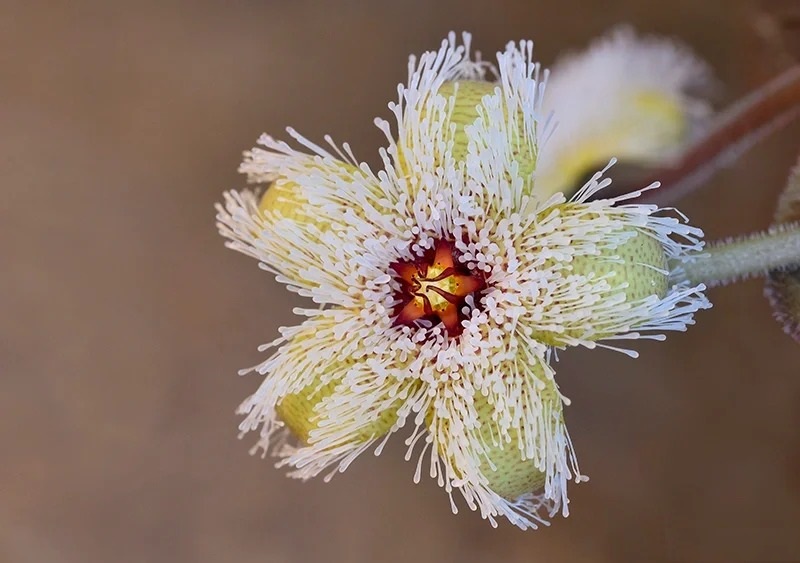
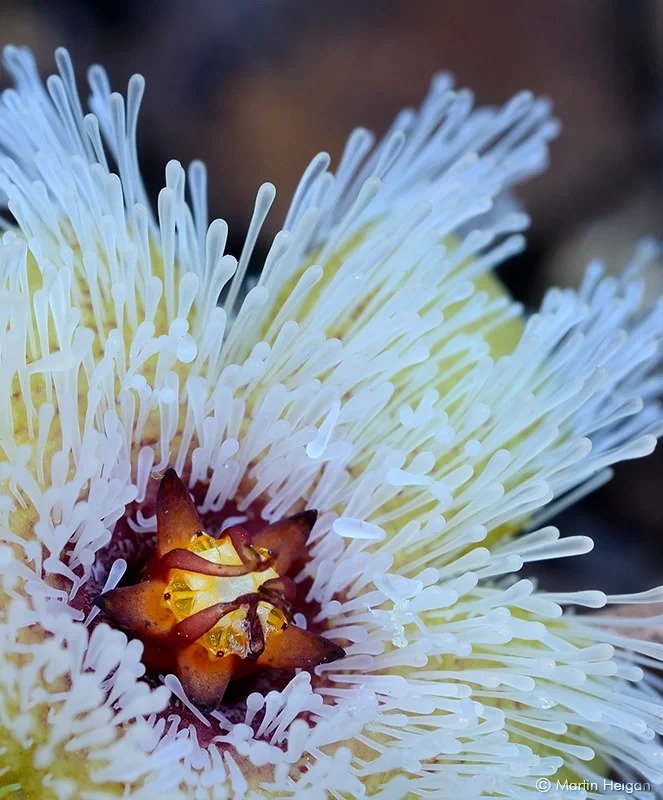
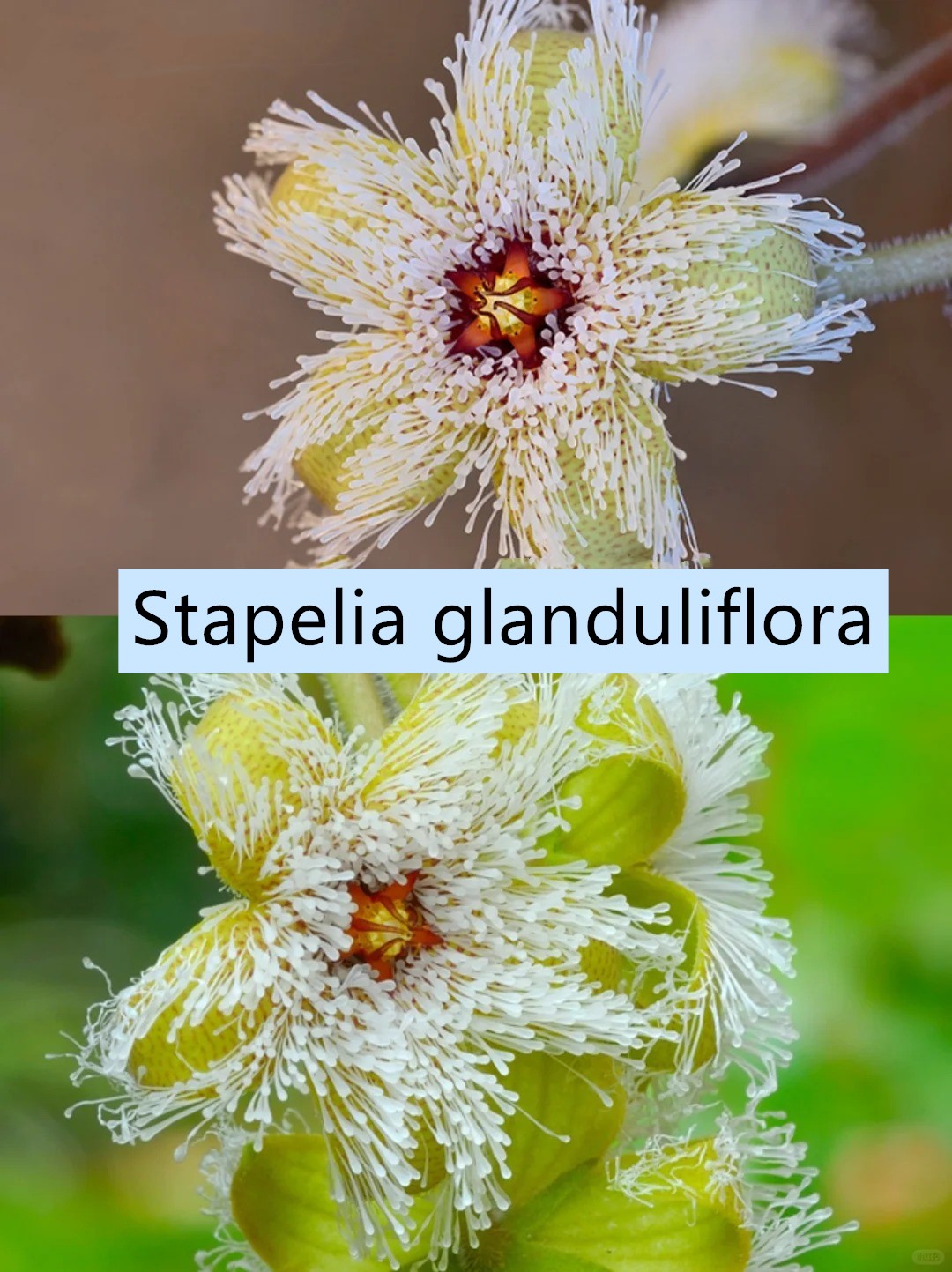
🌼 Dazzling star flowers: The star-shaped flowers, up to 3.5 cm in diameter, appear in autumn at the base of young stems. Their corolla is light yellowish green, streaked with pale red, and is covered with translucent white hairs, giving them a magical appearance.
🏜 Habitat and ecology: This plant is found in arid, stony scrubland on mountain slopes. Its population was once affected by habitat loss due to agriculture, but subpopulations still exist, although they remain vulnerable to habitat loss.
Add a touch of magic and exoticism to your plant collection with Stapelia glanduliflora! 🌟🌵
How to Grow and Care
Several species are fairly easy to grow. Others, often those with slightly hairy stems and the more unusual flowers, are more challenging and require careful watering (with some fertilizer) during the growing season and complete water withdrawal during the winter months. A minimum winter temperature of 10°C (50°F) is acceptable, providing plants are kept dry. A heated growing bench or incubator may help delicate plants to get through the colder months. However, many species live under shrubs in their habitat and prefer light shade rather than full sun.
A gritty compost is essential, and clay pots are advisable for the more delicate species. Some growers prefer mineral-only compost to minimize the chance of a fungal attack on the roots. A layer of grit on the surface of the compost prevents moisture from accumulating around the base of the stems.
Keeping Stapelias and their roots free of pests such as mealybugs is the key to success, as fungal attack often occurs due to damage to stems by insects.





(1).jpeg?w=768&h=768)